
The transducer is the part of a fish finder that actually does the work, it's what sends the sound wave into the water and picks up the echo. It's also the part most likely to get treated as an afterthought, bundled in with the display unit and never thought about again until it needs replacing. This guide covers what a transducer actually controls, and where to be careful about compatibility.
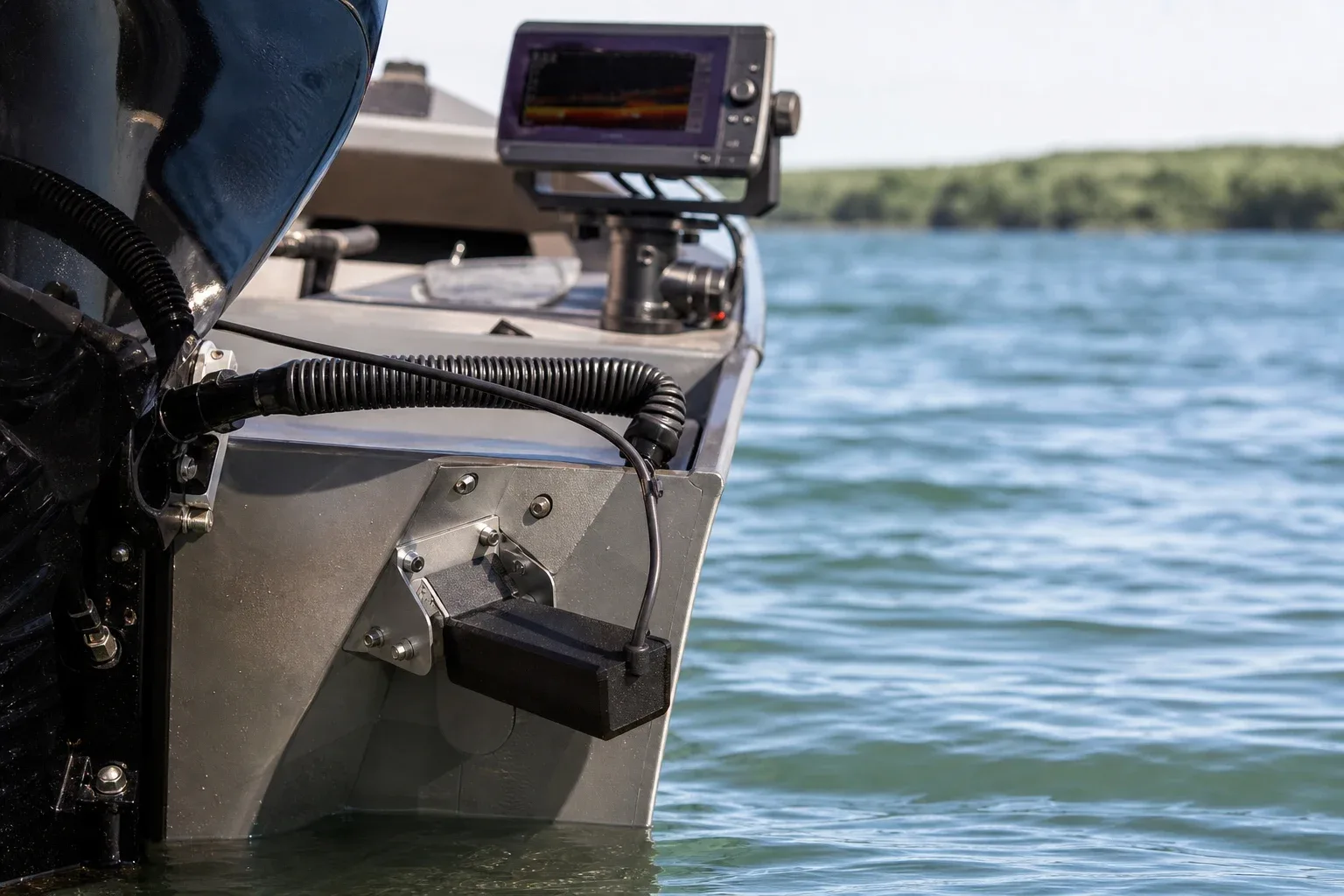
It's a real, separate product category
A major US tackle retailer lists Transducer Mounts & Accessories as its own category, distinct from general fish finder display mounts, confirmation that transducers and their mounting hardware are treated as a genuinely separate purchase decision from the display unit itself, not just an accessory that comes bundled and forgotten. Real, currently sold transducer products include the Garmin LiveScope 2 Transducer Series, which is sold both as part of a combo and as a standalone unit for pairing with a compatible display.
Frequency is a transducer decision, not just a display setting
Frequency range is physically determined by the transducer, and it's a straight tradeoff: low frequency (50-200 kHz), used by commercial fleets, reaches farther into deep water, while a higher frequency gives you more detail on the screen at the cost of range. Side and down imaging transducers push into higher territory specifically, typically 100-500 kHz, trading range for resolution. If you're choosing a transducer to pair with a display that supports multiple frequency ranges, this tradeoff, not the brand name on the box, is what should drive the decision.
| Frequency range | Range | Detail on screen |
|---|---|---|
| Low (50-200 kHz) | Greater, used by commercial fleets for deep water | Lower |
| High (up to 500 kHz for side/down imaging) | Lower | Higher, finer resolution |
Transom, thru-hull, and trolling-motor mount transducers
These three terms describe where and how a transducer physically attaches to your boat, and they're a real, meaningfully different set of options, but we were not able to independently verify a manufacturer's own technical explanation of the specific engineering differences between them this session (not found in available sources at a level of detail we'd stand behind repeating here). What we can say from the confirmed real product categories above: transducer mounting is genuinely its own decision, separate from the display mount covered in our fish finder mounts guide, and the right choice depends on your hull type and whether you're running a trolling motor. We'll update this section with a verified manufacturer source once one is confirmed.
Can I use a different transducer than the one that came with my unit?
We don't have a verified, brand-by-brand compatibility chart to publish here, not found in available sources for a general cross-brand compatibility rule we'd stand behind. In practice, transducer connectors and supported frequency ranges vary by manufacturer and even by product line within the same brand, so treat "will this transducer work with my display" as a question to confirm against the specific manufacturer's own compatibility documentation before buying, not something to assume from a general rule.
FAQ
What transducer types exist (transom, thru-hull, trolling-motor) and when does each make sense?
These describe different physical mounting locations on a boat, and Transducer Mounts & Accessories is confirmed as its own real retail category, but we don't have a verified manufacturer source explaining the specific engineering tradeoffs between the three mount types to publish here yet.
Can I use a different transducer than the one that came with my unit?
Compatibility varies by manufacturer and product line, and we don't have a general cross-brand rule verified to publish. Check the specific manufacturer's own compatibility documentation for your display before buying a replacement or upgrade.
Does frequency matter more for the transducer or the display?
The frequency itself is a transducer property, the display just shows what that frequency picks up. Low frequency (50-200 kHz) reaches farther in deep water; higher frequency, up to 500 kHz for side/down imaging, gives finer detail at shorter range.
Sources
- [S001] Tackle Warehouse : Fish Finders category, (accessed 2026-08-28)
- [S002] Wikipedia : Fishfinder, (accessed 2026-08-28)
- [S003] Wikipedia : Side-scan sonar, (accessed 2026-08-28)